
1. Spirited Away was created without a script

Despite having a rich plot with developed characters, Spirited Away was not made with a script. In fact, Miyazaki’s films never had scripts. “I don’t have the story finished and ready when we start work on a film,” the filmmaker told Midnight Eye. “I usually don’t have the time. So the story develops when I start drawing storyboards. The production starts very soon thereafter, while the storyboards are still developing.”
Miyazaki does not know where the plot is going, and he lets it happen organically. “It’s not me who makes the film. The film makes itself and I have no choice but to follow”
2. Miyazaki does everything
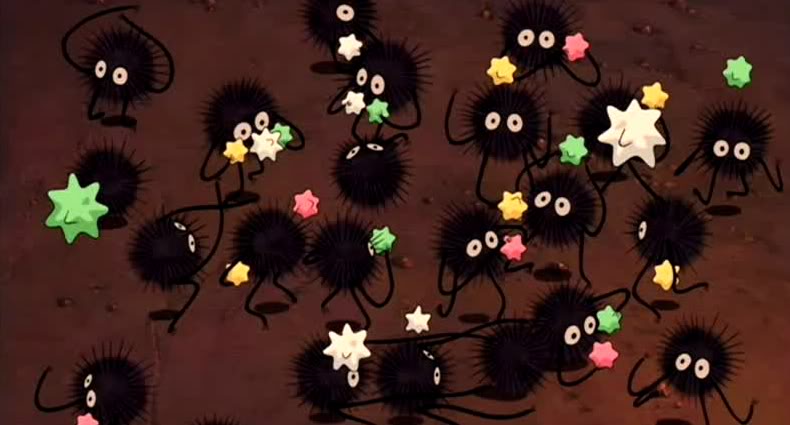
Miyazaki wrote, directed, and drew the storyboards for the movie; essentially writing the movie with drawings. When you watch the film, you’re seeing one man’s work and vision. The filmmaker is so influential and involved in the production, the New Yorker once called him “the auteur of anime.”
3. Chihiro was inspired by the daughter of one of the director’s friends
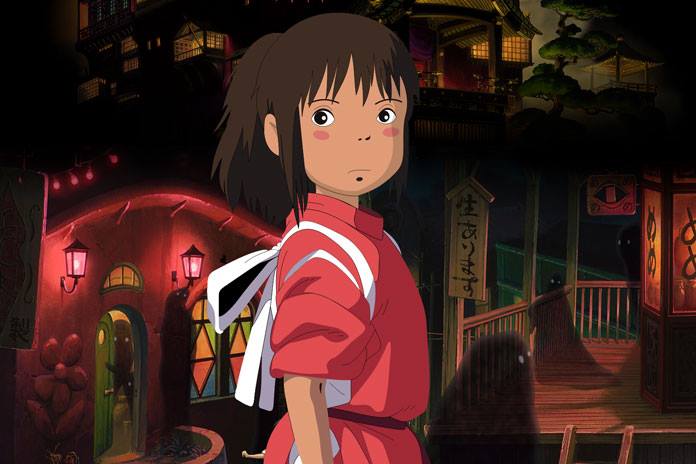
After announcing his retirement in 1997, the filmmaker took friends to his mountain cabin. His friend’s daughter and her peers inspired Miyazaki, as they were on the verge of adolescence and extremely apathetic. The auteur decided he needed to make a movie for ten-year-old girls. There wasn’t a lot out there for them; their magazines were heavily focused on romance and crushes. “I felt this was not what they held dear in their hearts, not what they wanted,” the filmmaker recalled. “And so I wondered if I could make a movie in which they could be heroines.”
Miyazaki wanted a movie that was made for regular ten-year-olds. The main character had to be ordinary, with no special abilities or traits. The girls needed someone human to relate to and show them that they could be heroines too. The main character, Chihiro, was made with the girls from the cabin in mind. “Every time I wrote or drew something concerning the character of Chihiro and her actions, I asked myself the question whether my friend’s daughter or her friends would be capable of doing it,” Miyazaki explained.
4. Small details make it feel real
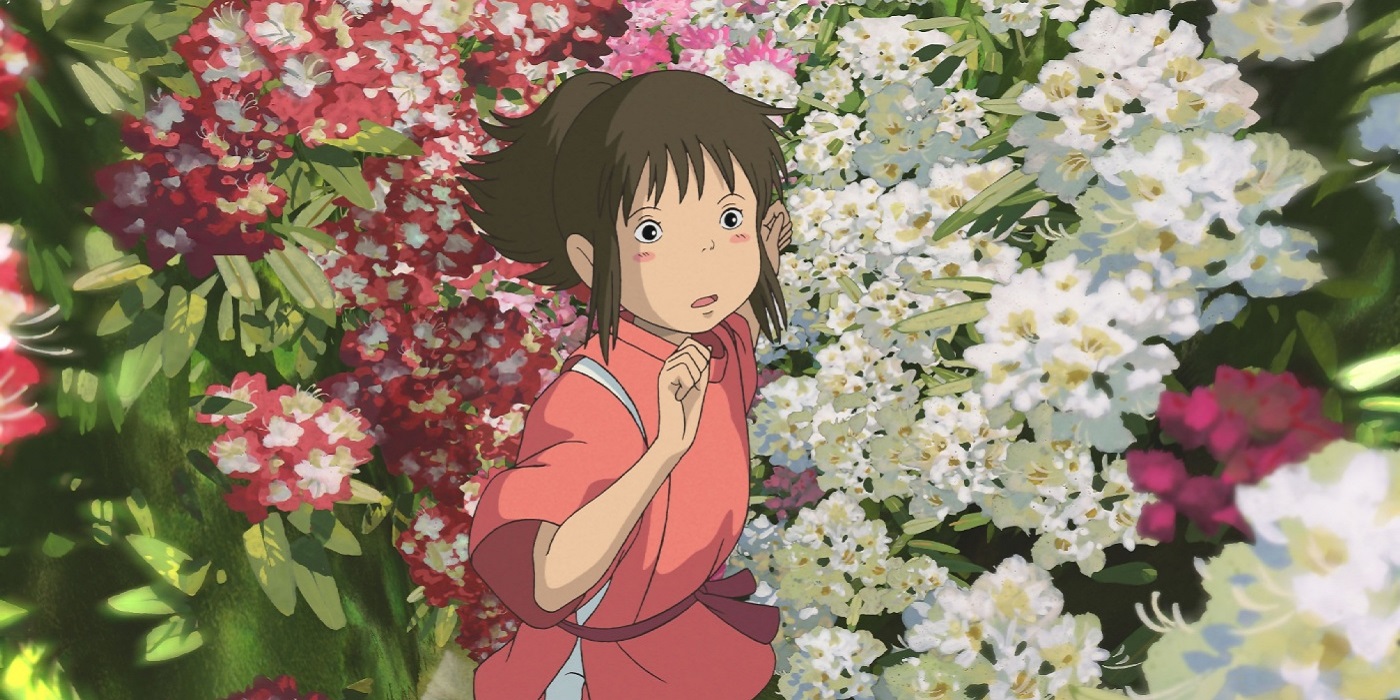
Miyazaki is often praised for creating gorgeous, immersive movies that feel almost real. Part of the reason for this is the close attention to detail. Small additions like dirt on the bottoms of feet, chopsticks falling over when bumped, or a zipper catching the sunlight contribute to the overall feel of the film. In the beginning of the movie, when Chihiro’s father exclaims he has four-wheel drive, he does! He is driving a first-generation Audi A4 Sedan complete with the trademark “Quattro” four-wheel drive system.
This attention to detail is also a useful tool for developing characters. Chihiro is supposed to be a typical ten-year-old, so she behaves as such. When she puts on her shoes, she does so with extra care and taps the toe of each shoe to make sure they fit properly. In another scene, the girl’s parents call for her, but she doesn’t answer until the second time; many of the movie’s staff even suggested that she shouldn’t reply until the third time, because of the unresponsive nature of young girls.
5. 2001 Oscars – for Best Animated Feature
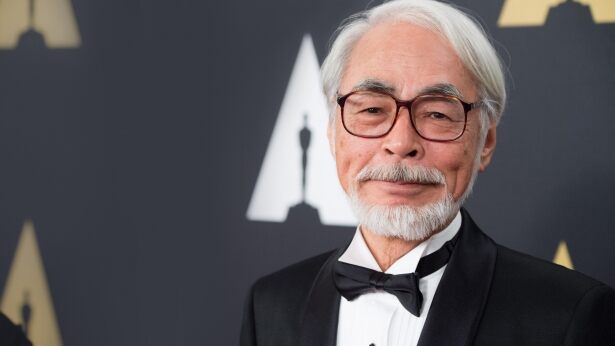
His 2001 feature, Spirited Away, won an Academy Award for Animated Feature. In 2014, he was chosen to receive an Honorary Award at the Academy’s Governors Awards.
6. The river spirit was inspired by Miyazaki’s experience cleaning a river
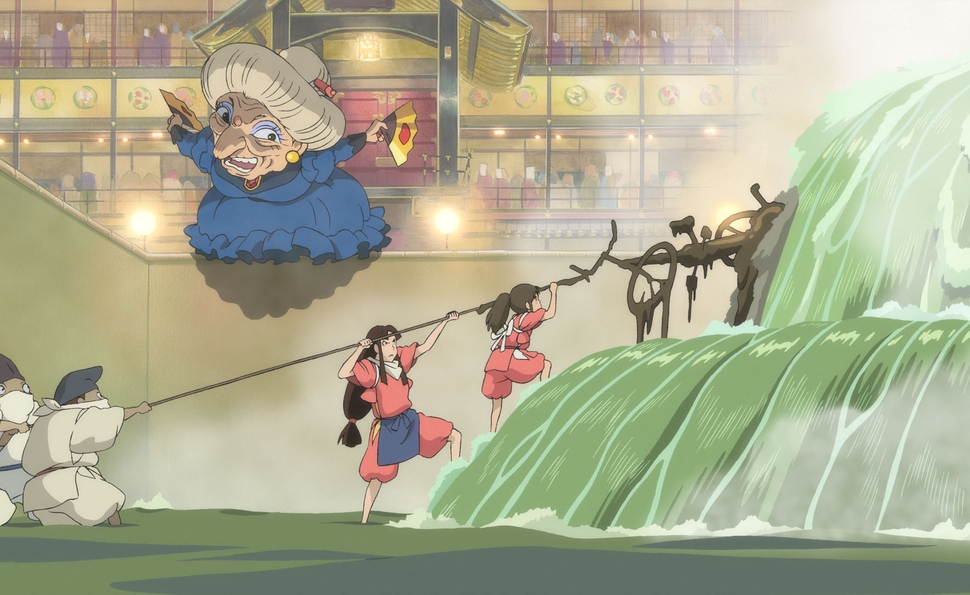
In one scene, a “stink spirit” comes to the bathhouse to get clean. Chihiro finds a bicycle handle sticking out the gunky creature’s side. After wrapping a rope around the handle and pulling it out, the gooey beast is revealed to be the spirit of a polluted river.
This scene is actually based on a real experience. “I cleaned a river once,” Miyazaki said. “My local river. And there really was a bicycle. It was stuck in there. Ten of us wrapped a rope around the bars and slowly pulled it out. We really cleaned up the river, and the fish are back. And that’s why I added that scene.”
7. The little extra scenes are called ‘ma’
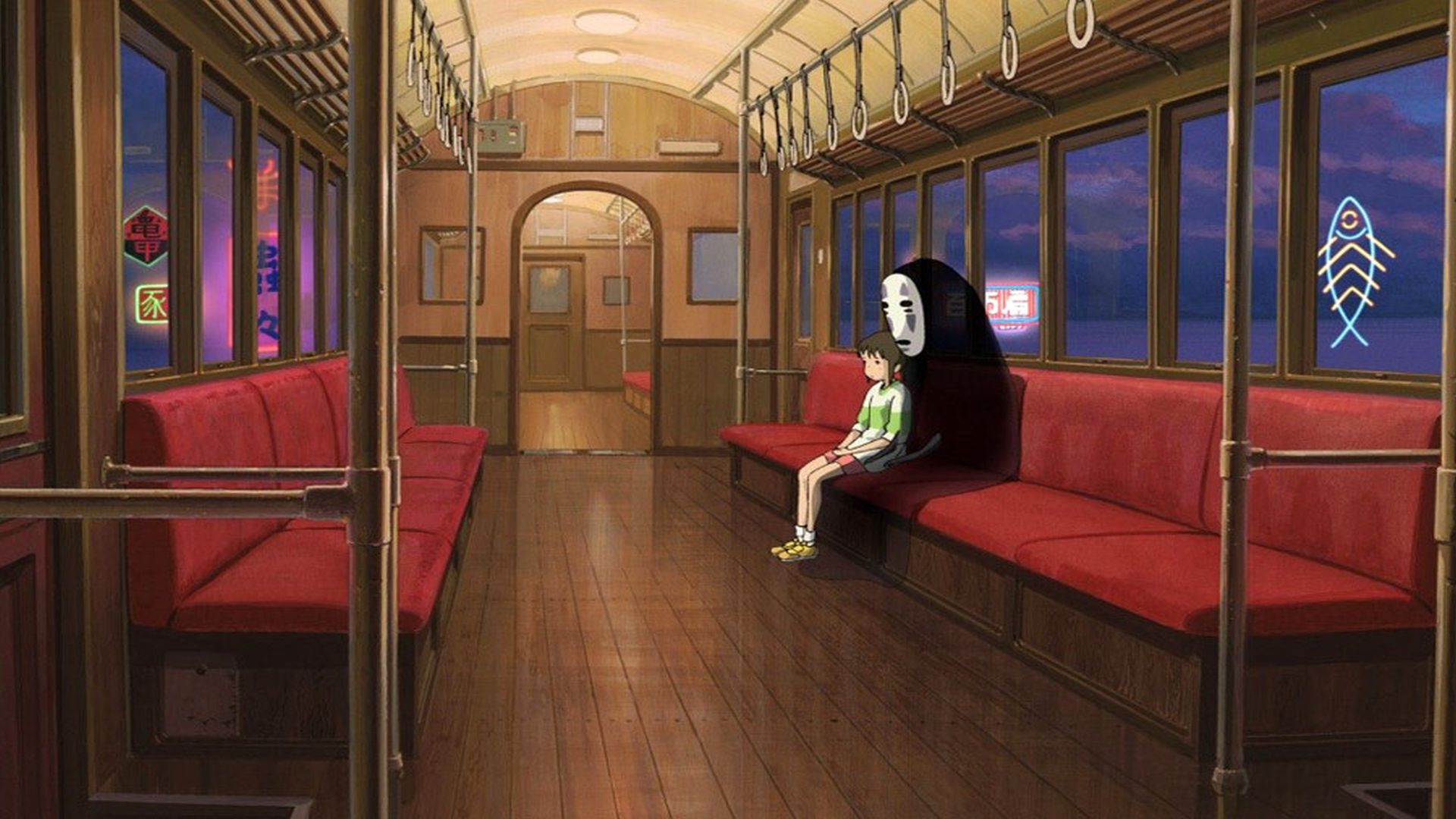
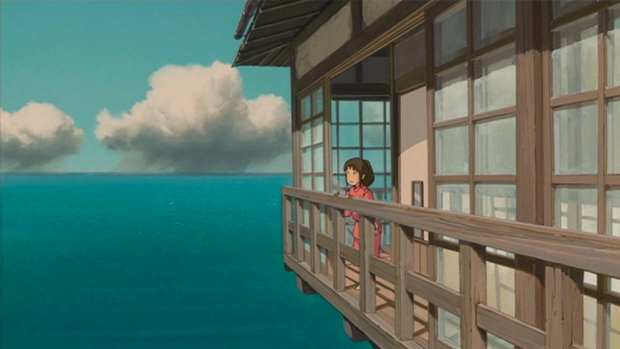
Quiet scenes of inaction, where a character might glance off into the distance or sit quietly, are a common occurrence in Miyazaki’s films. In an interview with Roger Ebert, Miyazaki explained the usefulness of these. “If you just have non-stop action with no breathing space at all, it’s just busyness, But if you take a moment, then the tension building in the film can grow into a wider dimension. If you just have constant tension at 80 degrees all the time you just get numb.”
8. Disney wasn’t the first American studio to try to court Ghibli
Studio Ghibli has always been a highly sought-after business. For over 20 years, American studios had tried to acquire the studio. Toshio Suzuki, the producer of Spirited Away, turned these offers down, but Disney finally came up with a unique deal. There were two pre-conditions: they wanted all the films, and they would not alter or the cut the films at all. Suzuki found these terms favorable and accepted.
9. The characters’ names reflect who they are
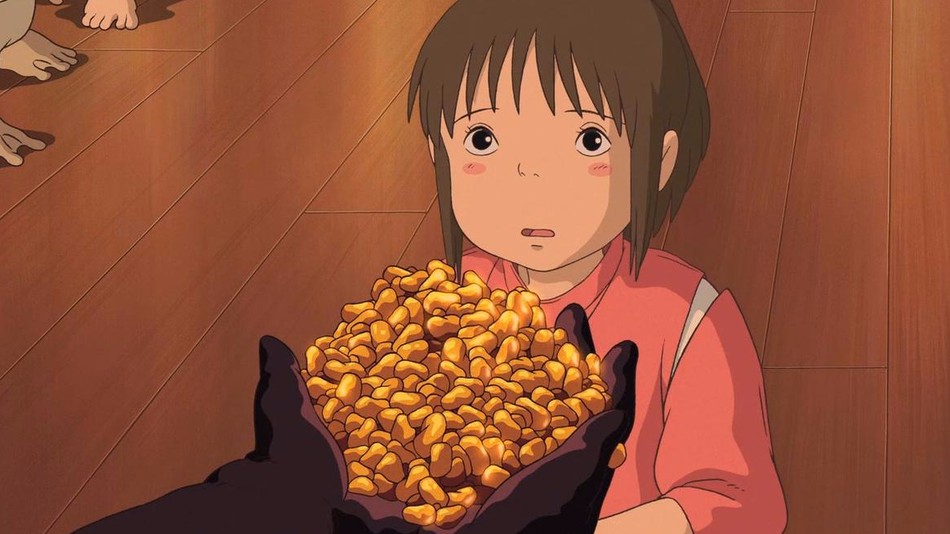
Boh means little boy or son, Kamaji means old boiler man, Yubaba means bathhouse witch, and Zeniba means money witch. The heroine Chihiro means a thousand fathoms or searches, while her worker name, Sen, just means thousand.
10. Dialog was added to clarify certain elements in the America version
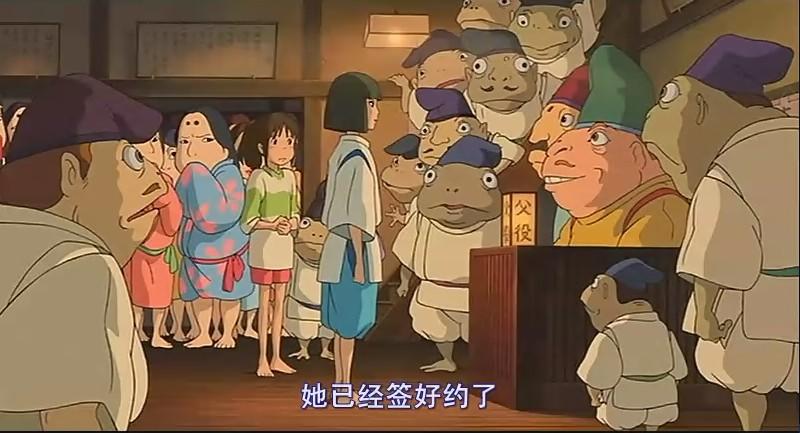
There are several times in the American version where Chihiro seems to narrate what she sees or what’s going on This was added in and was not part of the original. In an interview with John Lasseter, he explained that it was a necessary addition to help clarify certain elements for American audiences. For example, what is clearly a bathhouse to a Japanese viewer might not be apparent to an American viewer, so this translation issue was fixed by having the character explain, “Oh, it’s a bathhouse.”
11. Miyazaki did not attend the 2003 Academy Awards Due to His Opposition to the Iraq War
Despite the fact that Spirited Away was nominated for Best Animated Feature (and won!), Miyazaki quietly declined to attend the ceremony. He did not publicly explain why until 2009, when he opened up to The New York Times at Comic-Con. The filmmaker was against America’s invasion of Iraq, but the producer of Spirited Away requested that he did not vocalize these opinions.
Source: MF
 Movie Mania